When people find out I'm a DO, a Doctor of Osteopathic Medicine, two questions always follow: What's the difference between a DO and an MD? And: Is OMT like chiropractic? Both deserve a real answer, because osteopathic manipulative treatment is one of the most versatile, underutilized tools I have as a physician.
What Makes a DO Different?
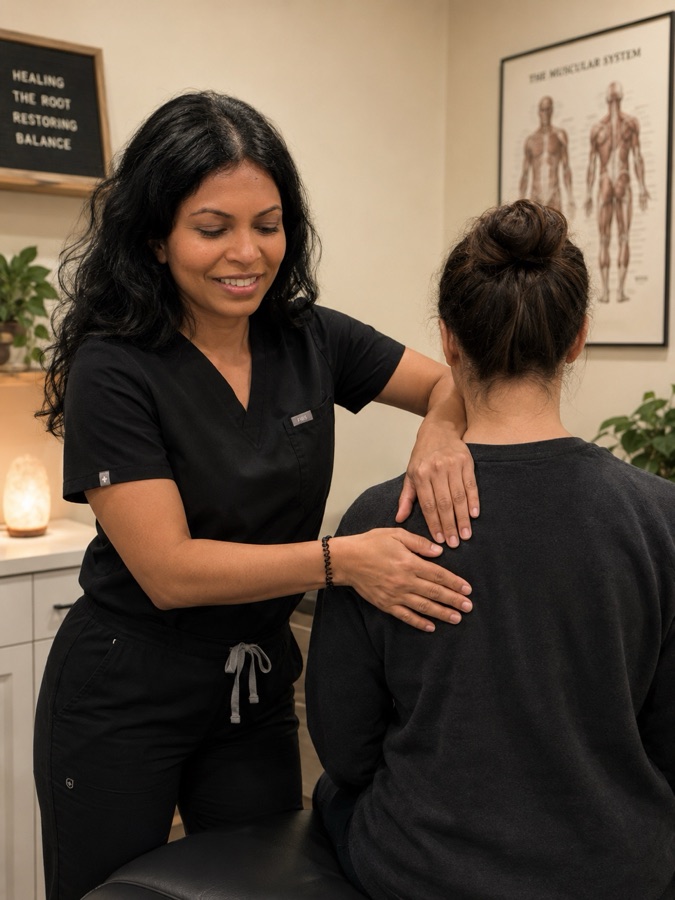
A DO is a fully licensed physician. DOs and MDs complete the same four years of medical school, the same residencies, the same specialty board exams, and hold the same prescribing rights and scope of practice in all 50 states.
The distinction is one of philosophy and training. Osteopathic medical schools integrate 200+ additional hours of hands-on osteopathic manipulative medicine into the standard curriculum, grounded in four core principles:
- The body is a unit, person, mind, and spirit together
- The body is capable of self-regulation and self-healing
- Structure and function are reciprocally interrelated
- Rational treatment is based on understanding these principles
Today, DOs make up more than 25% of all U.S. medical students, and roughly 56% enter primary care, reflecting osteopathic medicine's core commitment to whole-person, accessible care (AACOM, 2025).
What Is OMT?

Osteopathic manipulative treatment (OMT) is a hands-on diagnostic and treatment approach in which a physician uses their hands to assess and treat the musculoskeletal system: muscles, joints, tendons, fascia, and the fluid and nerve pathways running through them.
OMT is not one technique. It's a family of them:
- Soft tissue release and myofascial techniques
- Muscle energy techniques (gentle patient-resisted pressure)
- High-velocity low-amplitude thrust (the familiar "adjustment")
- Counterstrain and craniosacral work
- Lymphatic pump techniques
The approach is always adapted to the individual, their age, body, and condition. The goal: reduce restrictions, improve circulation and lymphatic drainage, decrease pain, and support the body's own ability to heal.
How OMT Differs from Chiropractic and Physical Therapy
There is overlap among all three. But the differences in scope and training matter significantly.
| OMT (DO) | Chiropractic (DC) | Physical Therapy (DPT) | |
|---|---|---|---|
| Medical license | Full physician, diagnose, prescribe, order labs, refer | Chiropractic care only, cannot prescribe | Rehab and movement therapy, cannot prescribe |
| Training | 4-yr med school + 200 OMT hours + 3–7 yr residency | 4-yr chiropractic college | 3-yr DPT graduate program |
| Primary focus | Whole body: structure, function, fluids, nervous system, visceral organs | Spinal alignment and nervous system | Movement, rehab, strength post-injury or surgery |
| Non-musculoskeletal conditions | Yes, lymphatic, respiratory, digestive, pediatric | Limited | Limited |
| Integrated with conventional medicine | Yes, OMT is one tool within a full medical visit | Separate from medical care | Typically requires physician referral |
A key advantage: as your DO, I can perform OMT, order the MRI, manage your medications, and coordinate a specialist referral, all in the same visit.
What Conditions Can OMT Help?
OMT works through a completely different mechanism than anything in a pill bottle, and for some patients, that's exactly what was missing.
OMT is best known for musculoskeletal pain, where the evidence is strongest. But because the musculoskeletal system connects to every other system, circulatory, lymphatic, neurological, respiratory, digestive, the scope is broader than most people expect.
- Acute and chronic low back pain (Level 1a evidence, AOA)
- Neck pain, tension headaches, and migraines
- Hip, knee, and shoulder pain
- Rib dysfunction and chest wall pain
- Sports injuries and repetitive strain
- Pregnancy-related back and pelvic pain; postpartum recovery
- Chronic sinusitis and congestion
- Asthma, OMT may improve chest wall mechanics and airflow
- Post-COVID respiratory stiffness and fatigue
- Chronic fatigue and fibromyalgia
- Digestive dysfunction, including IBS and constipation
- Dizziness and vertigo with cervical involvement
- Anxiety and stress-related somatic symptoms
- Infantile colic, a 2022 meta-analysis found OMT significantly reduced crying hours
- Recurrent ear infections and eustachian tube drainage
- Breastfeeding difficulties related to latch or jaw tension
- Growing pains and sports injuries in adolescents
Evidence in pediatrics is still developing, I always discuss this honestly with families.
OMT as Part of Whole-Person Care
OMT is most powerful when integrated alongside appropriate medications, lifestyle changes, or specialist referrals. It is not an alternative to medicine. It is medicine, delivered through the hands.
In my practice, OMT is available as a standalone visit (no membership required) or as part of a direct primary care membership. Every session begins with a thorough evaluation, including a careful check for contraindications where manipulation would not be appropriate.
If you're managing chronic pain, recovering from an injury, or navigating a condition where medication hasn't fully worked, OMT is worth a conversation.
- American Association of Colleges of Osteopathic Medicine (AACOM); UPMC HealthBeat, "MD vs. DO," updated January 2025.
- American Osteopathic Association (AOA), Tenets of Osteopathic Medicine (osteopathic.org).
- Roberts A, Harris K, Outen B, et al. "Osteopathic Manipulative Medicine: A Brief Review of the Hands-On Treatment Approaches and Their Therapeutic Uses." Medicines. 2022;9(5):33. doi:10.3390/medicines9050033. PMC9143587.
- American Academy of Family Physicians (AAFP). "Osteopathic Manipulative Treatment: A Primary Care Approach." American Family Physician, February 2019.
- Franke H et al. "Osteopathic manipulative treatment for nonspecific low back pain: a systematic review and meta-analysis." Chiropractic & Manual Therapies, 2014.
- American Osteopathic Association, Level 1a recommendation for acute and chronic non-specific low back pain. Referenced in ICOM, "What Is Osteopathic Manipulative Medicine?" 2025.
- Stoll V et al. "The Role of Osteopathic Manipulative Treatment in Osteoarthritis: A Scoping Review." Cureus, November 2024.
- PMC. "A Review on Osteopathic Manipulation in Patients With Headache." NIH / PMC, 2024.
- Castejón-Castejón M et al. "Osteopathic Treatment for Gastrointestinal Disorders in Term and Preterm Infants: A Systematic Review and Meta-Analysis." PMC, 2022.
- PMC. "Use of osteopathic manipulation techniques for management of acute otitis media in pediatric patients: a scoping review." PMC, 2025.
This post is for informational and educational purposes only and does not constitute medical advice. OMT is not appropriate for all conditions or all patients. Please consult a licensed physician to determine whether OMT is right for your specific situation.
Curious whether OMT could help your specific condition? Dr. Nelly offers osteopathic manipulative treatment, no membership required.